Green Structural Steel™
Sustainable Structural Steel, Backed by Numbers
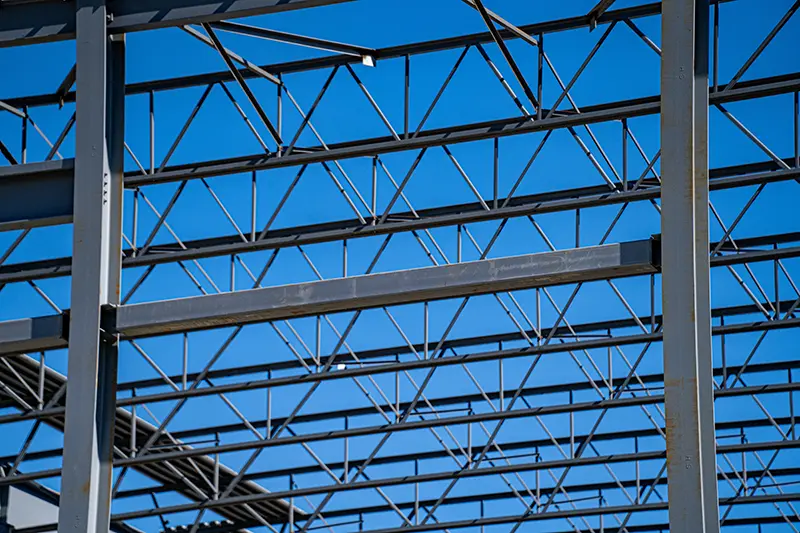
Green Structural Steel™ is American Katerra’s approach to the steel frame itself. It covers where the steel comes from, how it is fabricated, what happens to it after the building, and the carbon record that travels with it, stated in kg CO2e per metric ton. “Green” is a broad word, so we define it by what can be measured, and each part of that definition is tied to a number your team can check.
What Is Green Structural Steel™?
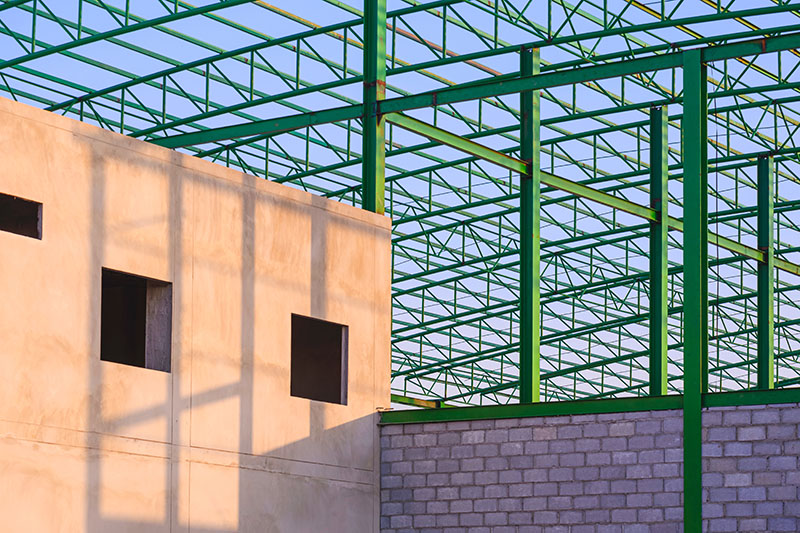
Green structural steel is structural steel with a lower, documented carbon footprint across the stages a project team can influence: how the steel is made, how it is fabricated, and what happens to it at the end of a building’s life.
Structural steel made in the United States starts from a strong position. Hot-rolled sections are produced in electric arc furnaces from recycled scrap, with about 93 percent recycled content on average, and 98 percent of structural steel is recovered at the end of a building’s life (AISC). The industry-average footprint of fabricated hot-rolled sections is 1,080 kg CO2e per metric ton from cradle to fabricator gate, more than 10 percent below the 2021 figure (AISC industry-average EPDs, October 2025).
That average is the starting point. Green Structural Steel™ is how we work to improve on it and document the result, package by package.
Green Structural Steel™ is American Katerra’s name for how it sources, fabricates, and documents structural steel. It is separate from any third-party certification, and the grades you specify, such as ASTM A992, stay the same.
Where the carbon is decided
1. At the mill
About 90 percent of the footprint of fabricated hot-rolled steel comes from producing the steel itself (AISC). So sourcing comes first: sections from electric arc furnace mills, with each mill’s facility-specific EPD collected at procurement.
2. In fabrication
Fabrication adds about 8 percent, and the average fabricator needs 1.0771 metric tons of steel to ship one (AISC). Our quantities come from the Tekla model before material is ordered, which is where waste is easiest to prevent.
3. After the building
Steel can be recycled again and again with no loss of properties, and members removed intact can be reused (AISC). Mill test reports tied to heat numbers keep the material’s origin on record for whoever handles it next.
Numbers before adjectives
The U.S. Federal Trade Commission’s Green Guides advise against unqualified claims such as “green,” because broad claims are difficult to substantiate (16 CFR 260.4). So we qualify ours. For each steel package we can report embodied carbon for the product stage, modules A1 to A3, in kg CO2e per metric ton and in total, built from mill EPDs and model quantities through life cycle assessment. That is the boundary LEED v5 requires project teams to quantify for structural steel (USGBC), and the Buy Clean California Act caps unfabricated hot-rolled sections used on state public works at 1,010 kg CO2e per metric ton (California DGS). One caution: recycled content describes circularity, and the carbon number comes from the EPD. AISC advises against using one as a proxy for the other (Modern Steel Construction).
Concept, product, frame
Three names do three jobs. Green Carbon Steel™ is the concept: a steel supply chain decarbonized step by step. Green Steel is the product you specify. Green Structural Steel™ is how the frame is delivered, from mill selection to the documentation that arrives with the steel, using the model-first workflow we call Green Information Modeling™. Steel made with hydrogen is a separate, longer-term track: our Hydrogen Steel research and development program.
Green Structural Steel™ FAQs

What is green structural steel?
Green structural steel is structural steel with a lower, documented carbon footprint: sourced from scrap-based electric arc furnace mills, fabricated with waste kept low, and recoverable at the end of a building’s life. American Katerra uses the name for its approach to sourcing, fabricating, and documenting a steel frame.
Is structural steel a sustainable building material?
U.S. structural steel has strengths that can be measured. Hot-rolled sections average about 93 percent recycled content, are made in electric arc furnaces, and are recovered at a rate of 98 percent at the end of a building’s life, according to AISC. Steel still carries a carbon footprint, 1,080 kg CO2e per metric ton on average for fabricated hot-rolled sections, so sourcing and documentation matter.
How is Green Structural Steel™ different from Green Steel and Green Carbon Steel™?
Green Carbon Steel™ is our concept for decarbonizing the steel supply chain. Green Steel is the lower-carbon product you specify. Green Structural Steel™ describes how we deliver the frame: mill selection, model-based fabrication, and embodied-carbon documentation for the package.
Is Green Structural Steel™ a certification or a different grade of steel?
No. It is American Katerra’s name for its approach. The steel meets the same ASTM grades and project specifications as the rest of our structural steel. The evidence comes from mill EPDs, mill test reports, and the life cycle assessment of your package. American Katerra is a member of AISC, ResponsibleSteel, and the Global Steel Climate Council, and our parent company, Yamaguchi Heavy Industries Ltd., has joined Climate Group’s SteelZero initiative. Membership is separate from product certification.
How do I specify green structural steel?
Ask for numbers. Require facility-specific EPDs for the steel, name the boundary (A1 to A3), and set a global warming potential limit in kg CO2e per metric ton. AISC recommends EPD disclosure in every specification and suggests setting limits at 125 percent of the industry average. Then ask your fabricator how quantities and waste are controlled.
Inquiries About Green Structural Steel™

Working toward an embodied-carbon target, a Buy Clean requirement, or a LEED v5 submission? Send us your drawings and specification. We will show you the steel package in kg CO2e per metric ton and where sourcing and fabrication can lower it. Talk to our team.