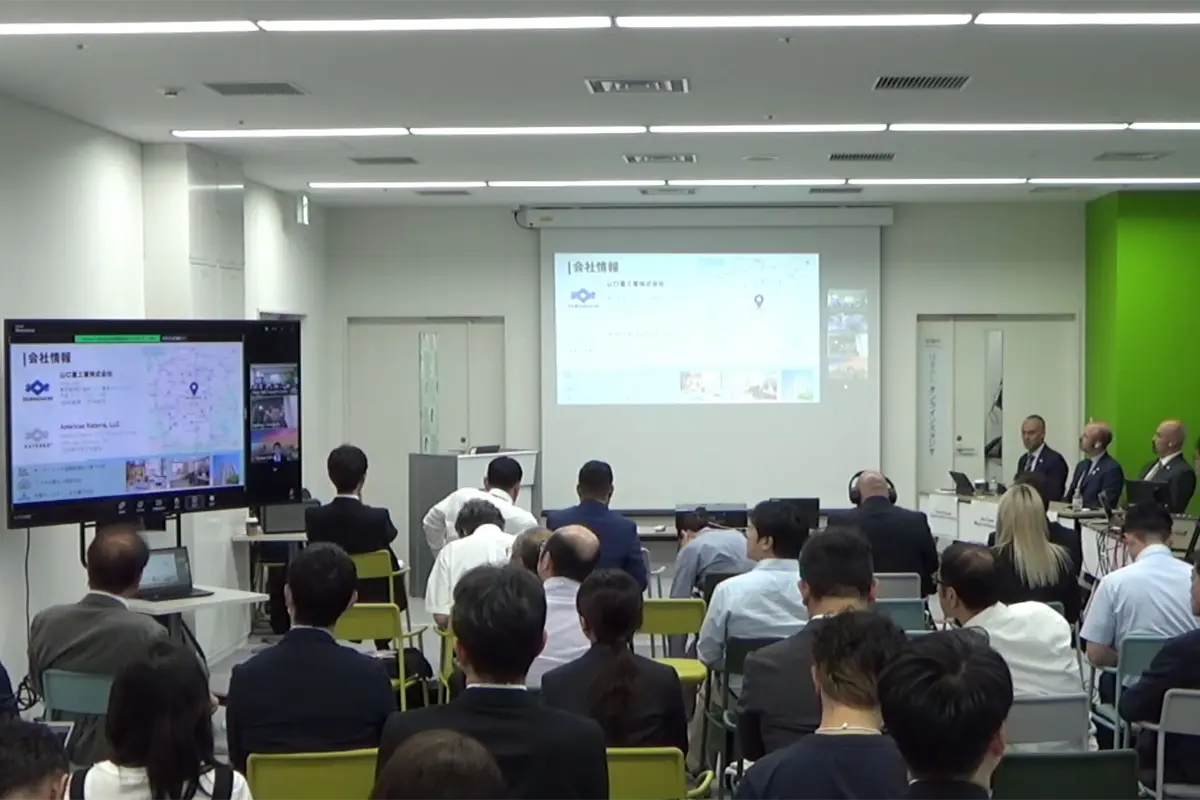
For many Japanese companies, the United States is the obvious next market, and also the hardest one to actually begin. The distance is real, the rules are unfamiliar, and even a well-funded plan can stall on practical questions: where to set up, how to hire, how to get through the first year on the ground. On May 20, 2026, the Tokyo Metropolitan Small and Medium Enterprise Support Center (Tokyo SME Support Center) addressed those questions directly with a hybrid seminar built around one idea: that Texas can be a realistic entry point into the American market. American Katerra, the U.S. arm of Yamaguchi Heavy Industries, Ltd., was invited to share its own expansion story, and the program ran from market strategy and on-the-ground tactics all the way to one founder’s candid account of starting from zero.
- Event: “Breaking into the American Market through Texas,” a 2026 Tokyo SME Support Center seminar
- Date / format: May 20, 2026 (Tokyo). Held in person and streamed live via Zoom.
- Host: Tokyo Metropolitan Small and Medium Enterprise Support Center
Why Texas, and Why Now
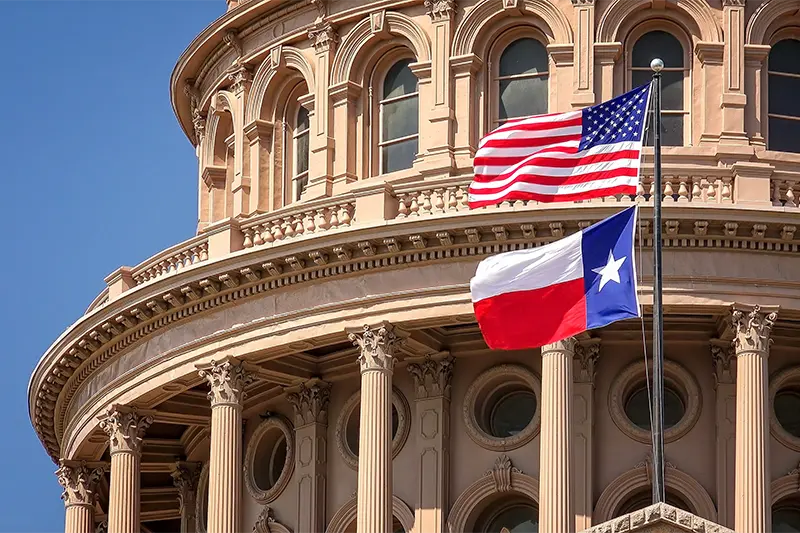
The case for Texas is largely a matter of numbers. On its own, Texas would rank as the second-largest economy in the United States and one of the largest in the world, with a gross domestic product of roughly 2.9 trillion dollars, around eighth globally. It levies no corporate income tax and no personal income tax, pairs that with some of the lowest manufacturing operating costs in the country, and consistently appears among the most affordable places to live. For a manufacturer, location matters as much as cost. Texas sits in the middle of North America, within about three hours’ flight of every major U.S. city, with access to the Gulf of Mexico and a transport network that spans highways, rail, deep-water ports, international airports, and pipelines. The workforce skews young, with a median age around 32, and the state invests heavily in training and retraining programs that help keep graduates in-state.
Timing was the other half of the message. What makes this an opportune moment, several speakers argued, is that the rest of the world has already noticed Texas while much of Japanese industry has not yet looked closely. That gap was the through-line of the morning.
A Practical Framework for Entering the U.S.
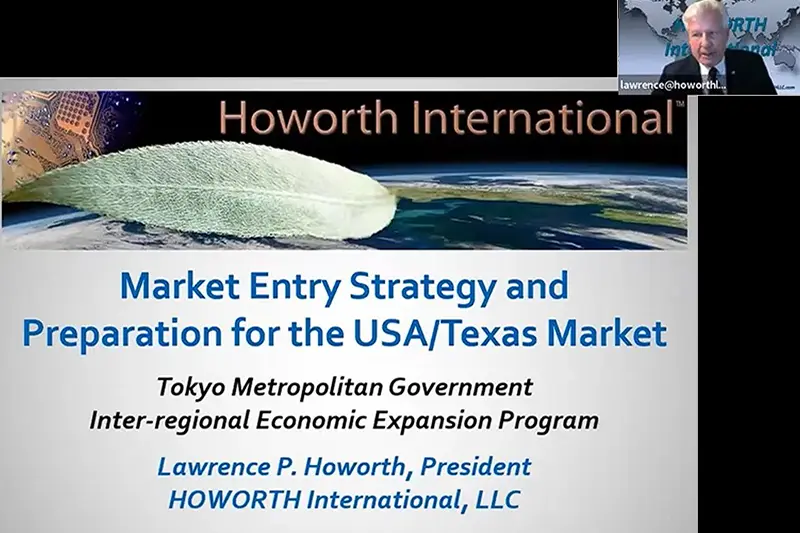
The opening session set the tone. Mr. Lawrence P. Howorth, President of HOWORTH International, a Dallas-based advisory firm with more than three decades of experience guiding companies into foreign markets, laid out the questions every company should answer before it commits. Why enter at all, and with what specific goal, whether that is offsetting softer demand at home, pursuing growth, raising capital, or following existing customers. How well the company actually understands the market, using research rather than assumption. Which entry mode fits, given a spectrum that runs from exporting and licensing through franchising, partnerships, acquisitions, and building from the ground up. Whether the product is genuinely ready, in terms of market fit, intellectual-property protection, regulatory approval, and localization. How the move will be financed, with a realistic tolerance for risk and a two-to-five-year horizon rather than a quick return. Who will lead it, since success usually demands committed senior attention, local hires, and a clear handle on visa requirements. And how detailed the plan is, ideally with a year or more of preparation and room to test and adjust.
Howorth was equally direct about how companies fail. A single successful export order is not proof of a market, and early revenue rarely covers the real cost of entry. Economic-development organizations can open doors and make introductions, he cautioned, but they do not sell on a company’s behalf. And incorporating too early, before the entry strategy is settled, can leave a firm tied to a structure that is expensive and awkward to unwind.
Reading the Texas Market
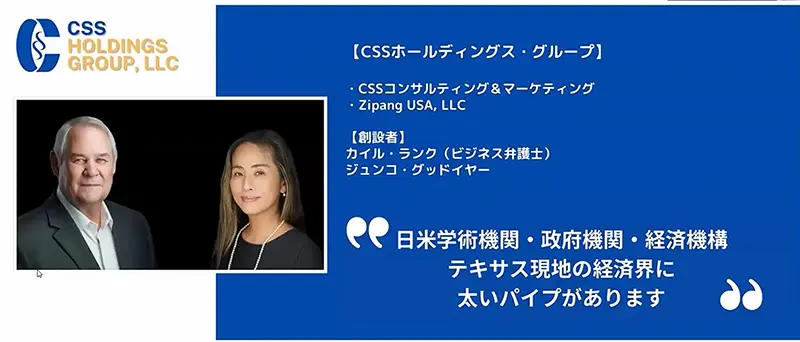
If Howorth covered the mechanics, Ms. Junko Goodyear addressed the mindset. A Co-Managing Partner of CSS Holdings Group and a local supporter for the Tokyo–Texas hands-on program, she has spent more than twenty years in marketing and business development across Japan and the United States. Her central point was about positioning. Japanese companies, she noted, have historically been most comfortable in the coastal states they already know, while much of Texas, which leans conservative outside its big cities, has stayed comparatively unexplored by Japanese business. That, in her view, is precisely the opportunity: a large market with relatively little Japanese competition, and fewer of the informal obligations that can complicate business within a dense expatriate community.
She was candid about how to win there. American customers tend to respond to practical value rather than national branding. There is real respect for Japanese engineering, she said, but buyers care less about heritage or “Cool Japan” imagery than about whether a product solves a concrete problem at a sensible price. The Japanese companies that have succeeded in the U.S., from Sony to Honda to Toyota, did so on that rational value rather than cultural appeal. Her practical advice followed naturally: lean on the local economic-development organizations that exist to attract and support new entrants, and build genuine relationships, including through charity and community involvement, where decision-makers actually spend their time.
Brownsville: a Border Gateway Built for Trade
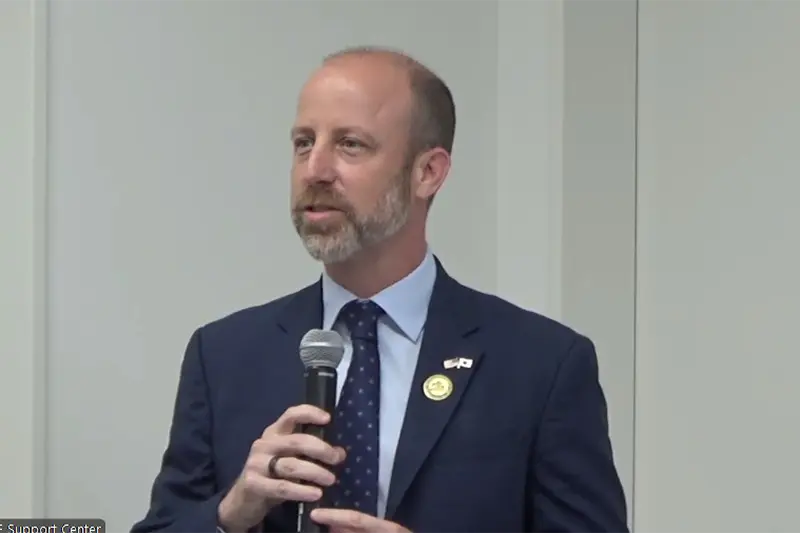
The program then narrowed from the state to a single city. A delegation of civic and economic-development leaders from Brownsville, at the southern tip of Texas on the U.S.–Mexico border, traveled to Tokyo, led by Mayor Mr. John Cowen Jr., to present the city’s case in person. Mr. Gilberto Salinas, President & CEO of the Greater Brownsville Economic Development Corporation, explained why a city of roughly 200,000, anchoring a Rio Grande Valley region of about 1.5 million, has become one of the most closely watched economies in the country.
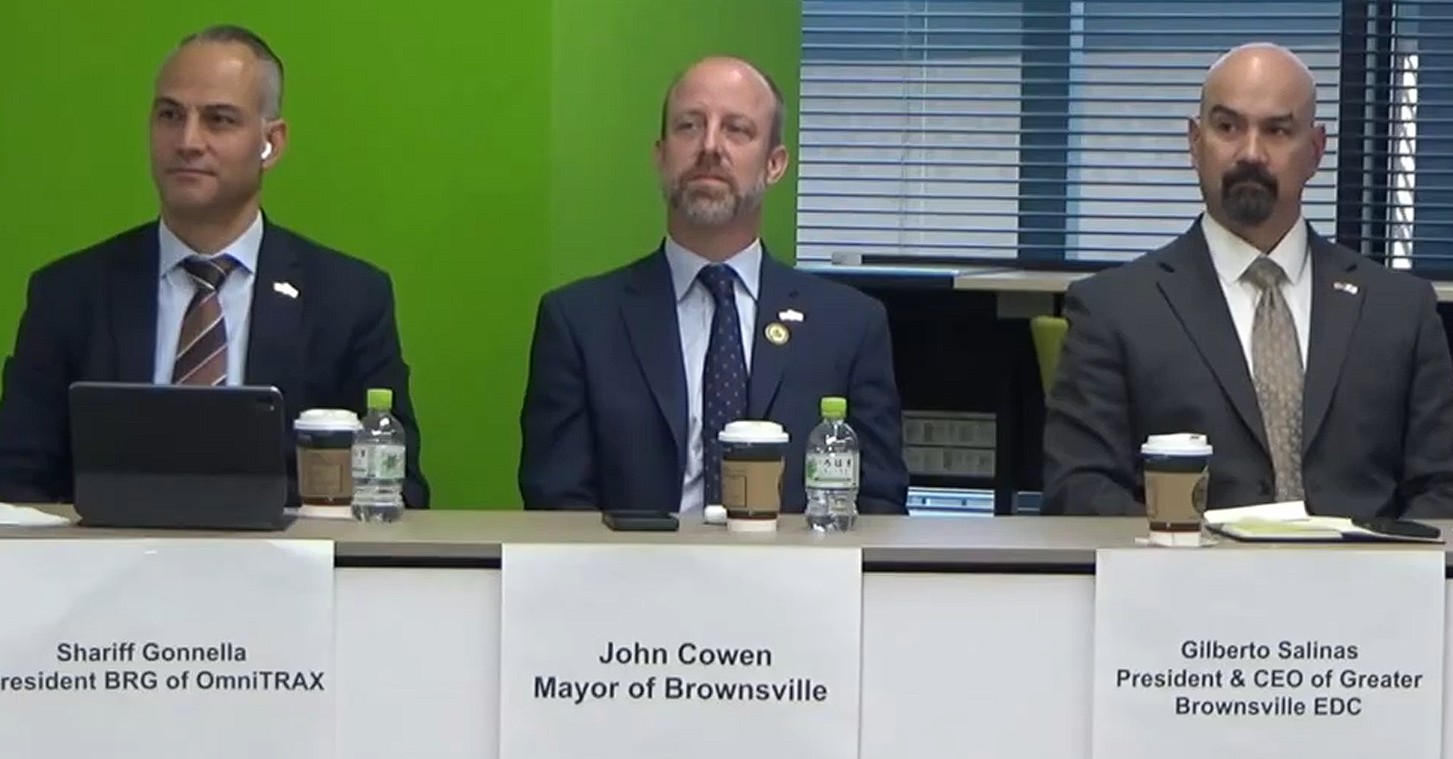
Part of the answer is geography. Brownsville connects to Matamoros, Mexico through three international bridges that carry tens of thousands of crossings a day, sits on the deep-water Port of Brownsville, and is tied together by road, rail, and pipeline links that make cross-border logistics straightforward. Mr. Shariff Gonnella, President BRG of OminiTRAX explained the Brownsville and Rio Grande International Railroad, a four-decade operation linking the port to the wider U.S. and Mexican networks, reports on-time performance well above the industry norm and moves exactly the kinds of freight a fabricator depends on, from steel and construction materials to automotive and energy cargo.
The bigger part of the answer is momentum. SpaceX has built its headquarters and Starship operations at nearby Starbase, and figures presented at the seminar put its regional economic impact above 13 billion dollars over two years, supporting on the order of 24,000 direct and indirect jobs, with a Starbase workforce expected to grow toward 8,000. That gravity is pulling in suppliers: Linde, the industrial-gas company, became the area’s first tier-one SpaceX supplier and is building a new plant to serve it. On the strength of all this, Brownsville has been ranked the top U.S. metro for economic strength. For a visiting Japanese manufacturer, Salinas’s message was that the city is organized to help newcomers get established, with site-selection help, workforce data, and introductions to local partners, rather than simply to welcome them.
Build for Dreams: American Katerra’s Journey from Zero

The session that landed most directly with American Katerra’s own audience was Toyokazu Yamaguchi’s. Speaking under the banner “Build for Dreams,” Yamaguchi, President and CEO of American Katerra, LLC, walked through the company’s path from incorporation to a working business, and he did not gloss over the difficult parts.
The company was established in October 2024 in downtown San Antonio, carrying the track record of its parent, Yamaguchi Heavy Industries, into a new market. San Antonio was a deliberate choice, helped along by the active recruitment of Bexar County Judge Peter Sakai, himself a descendant of Japanese immigrants who settled in South Texas. The initial investment was assembled from company capital, a loan from the parent, and financing from Japan’s Shoko Chukin Bank.
The hard part, Yamaguchi explained, was not the legal incorporation, which was quick, but everything physical that came after. Without a U.S. Social Security number, ordinary tasks turned into obstacles. A phone line, an office lease, an apartment: each one assumed a credit history the company did not yet have. The Social Security number itself depended on an E-2 investor visa, which required a real, deployed investment of more than 300,000 dollars and took roughly a year to obtain. The result was a kind of catch-22, with capital in the bank that was hard to actually spend; by Yamaguchi’s account, it took about eight months to deploy that first 300,000 dollars. The company built credit from scratch the slow way, in one case paying two years of office rent up front to establish a track record, and a driver’s license, earned only after written and practical tests, was another step before that credit-building could really begin.
He was quick to add that the company had not navigated all of this alone. On the legal side, the law firm, Smith Gambrell Russell, handled the incorporation and the formalities that followed. On the web and marketing side, JU Marketing’s Ryotaro Seki built the company’s online presence, including its website, and, just as usefully, helped line up the right local vendors and work through the everyday essentials, the mobile phone account, office internet, and equipment, that had been so hard to arrange without a Social Security number.
Hiring took its own approach. American Katerra leaned on Japanese-affiliated staffing channels to find people who could work across both languages and recruited new graduates directly through campus information sessions, while learning that choosing the right agency mattered as much as the search itself.
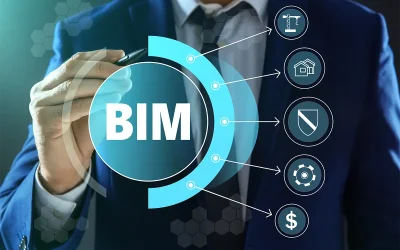
Looking ahead, Yamaguchi laid out a roadmap that gives the “Build for Dreams” vision concrete dates. 2026 is for market research and trade-show presence, supported by the Tokyo program. A production base and a Green Carbon Steel facility are targeted for 2028. The company aims to make San Antonio its global headquarters by 2029, to list on the Texas Stock Exchange (TXSE) by 2030, and to expand into Pennsylvania, with a possible move into the United Kingdom, by 2031. Underpinning the plan is the model the company brought from Japan: combining Building Information Modeling (BIM) and Life Cycle Assessment (LCA) with its trademarked Green & Blue Carbon Steel™ to cut carbon across fabrication and the wider supply chain.
The Tokyo–Texas Hands-On Bridge
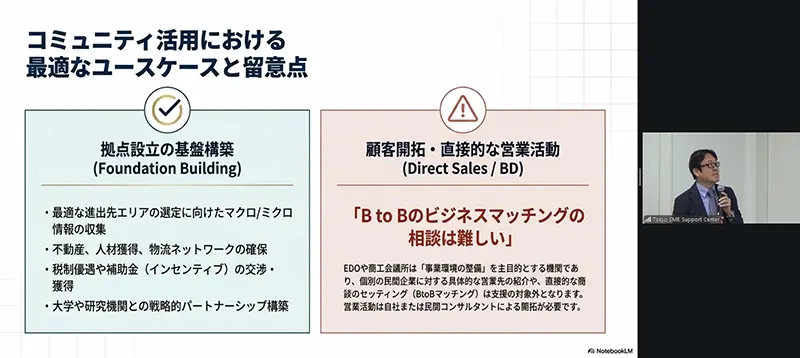
None of this happened in isolation. Tokyo and Texas signed a memorandum of understanding in 2022 to support small and medium-sized enterprises entering each other’s markets, and the Tokyo SME Support Center has since built a network with around two dozen economic-development organizations across Texas. The Center’s team, and Mr. Satoru Yamamoto in particular, explained how its hands-on program turns that framework into step-by-step help: dedicated advisors who know the U.S. market, market and regulatory briefings, direct introductions to those local communities, and a roster of registered experts, including lawyers, tax accountants, and marketing specialists, available for initial consultations. For companies that travel, the program arranges structured local visits. American Katerra’s own launch is one example of how that kind of step-by-step support plays out in practice.
For in-person attendees, the morning closed with a networking session alongside the visiting Brownsville delegation, a direct chance to trade questions and contacts with the people who can help a company get started.
What It Means for Japanese Companies Considering the U.S.
A few themes ran through the morning. The fundamentals favor Texas: scale, low costs, central logistics, and a young workforce are not marketing claims but the reason the rest of the world is paying attention. Place still matters within that, and a border city like Brownsville can turn logistics from a cost into an advantage. Preparation beats a certain kind of speed; the firms that struggle tend to be the ones that incorporate before they have a strategy, or expect early sales to cover the cost of entry. Culture is the quiet variable, and success usually comes down to solving a real problem and building real relationships rather than leading with national branding. And precedent is worth more than any report. American Katerra’s account of the Social Security catch-22, the year-long visa, and the slow build of credit is not discouraging so much as clarifying: it shows exactly where the friction is, and that it can be worked through. For the company, sharing that was a way to give something back to the community of Japanese firms weighing the same move, and a measure of how far it has come since 2024.
Contact Us!
Build for Dreams. If your company is considering a move into the U.S. market, American Katerra, rooted in Japan and built in Texas, is glad to compare notes on what the journey actually takes. Reach out to our team, or take a closer look at how our Green & Blue Carbon Steel™ is helping to decarbonize the structural steel supply chain.