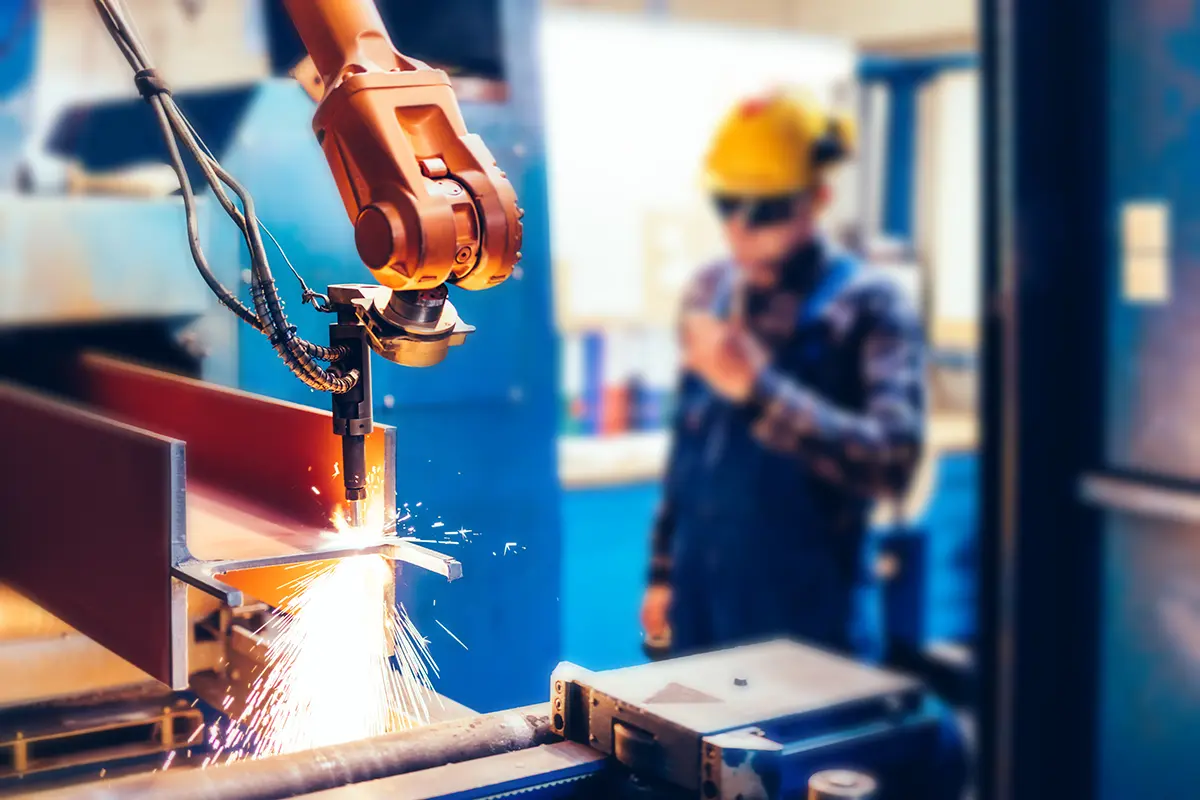
Skilled structural welders are getting harder to hire, project schedules are getting tighter, and specifications keep demanding more documentation for every weld. If you manage fabrication capacity, or buy it, that squeeze is your daily reality. Robotic welding automation is how a growing share of U.S. fabricators hold quality and lead times steady anyway. This guide explains what robotic welding is, where it fits in structural steel fabrication, what it changes for cost and quality, and how to decide between buying a system and buying welded parts from a fabricator that already runs one.
What Is Robotic Welding?
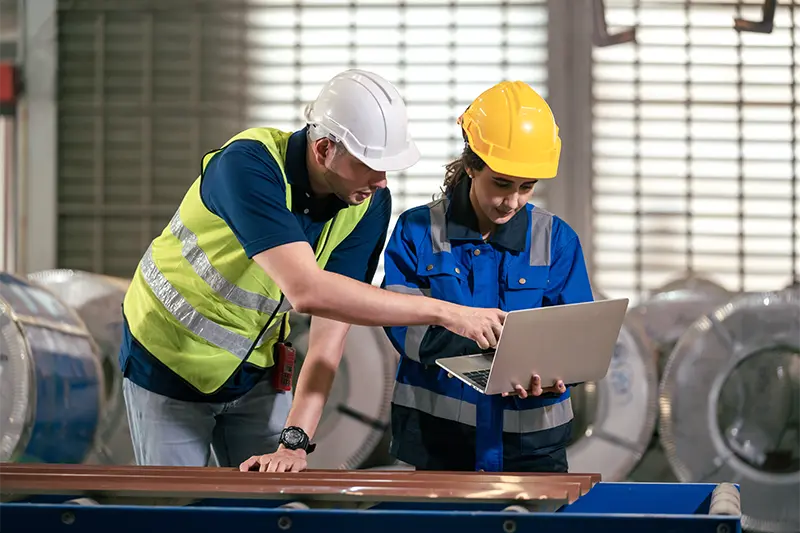
Robotic welding is the use of a programmable robotic arm to execute welds automatically: the machine carries the torch along a programmed path while controlling parameters such as travel speed, voltage, and wire feed. A human still does the engineering. Welders and technicians set up the joint, fixture the parts, select the qualified weld procedure, and inspect the result. The robot’s job is to execute that procedure the same way every time.
A typical robotic welding cell in a structural steel shop combines a six-axis robotic welding arm, a positioner that rotates heavy weldments into the ideal welding position, fixturing to hold parts, and sensing that locates the actual joint before the arc starts. The governing rules do not change: structural work is still welded to AWS D1.1 with qualified procedures (WPS). Automation changes who holds the torch, not the code the weld must meet.
Welding Automation Options: From Cobots to Robotic Welding Cells
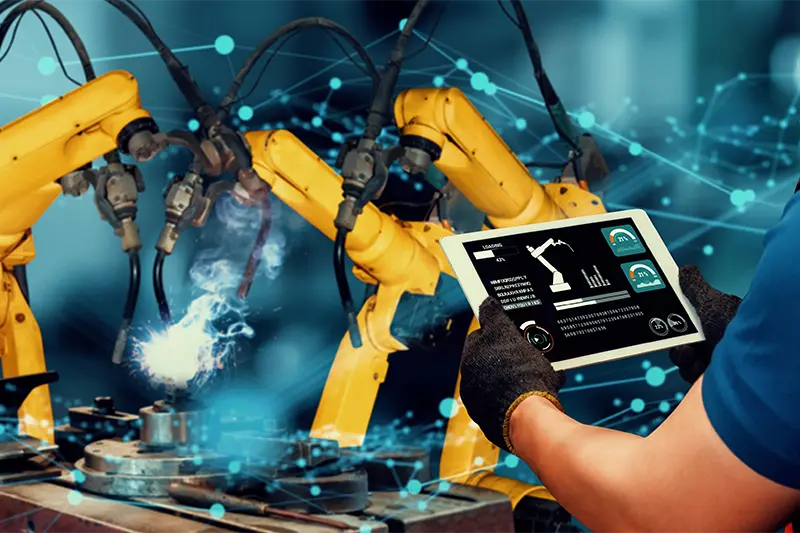
Welding automation is a spectrum, and the right point on it depends on part size, batch size, and how repetitive your geometry is. Fixed automation, like seamers and bore welders, does one joint type extremely well. Collaborative robots (cobots) are the fast-deployment end: lower cost, easy to reprogram, and practical for smaller parts and shorter runs, though limited in reach and duty cycle. Full robotic welding cells, an arm plus positioner inside a safety enclosure, are the workhorses for production welding: high arc-on time, heavy payloads, and consistent output shift after shift. At the top end, integrated lines connect cutting, fit-up, and welding automation equipment into a continuous flow.
Structural steel tends to push toward the cell end of the spectrum. Beams, brackets, embeds, and plate assemblies are heavy, and the value of automation compounds when a positioner keeps every weld in position instead of forcing out-of-position work. That is why the practical question for most fabricators is not “which robotic welding machine” but “which cell configuration, and who integrates it.”
Advantages of Robotic Welding for Structural Steel
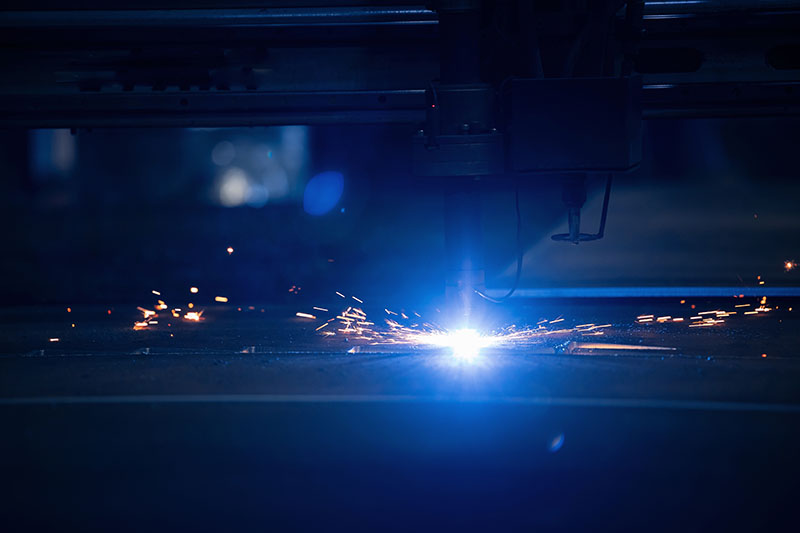
The advantages of robotic welding show up in four places. First, consistency: a robot runs the same qualified procedure identically on the first weld of the day and the five-hundredth, which means predictable penetration, predictable profiles, and fewer repair cycles. Second, throughput: cells keep the arc on while manual stations pause for repositioning and fatigue, so repeat assemblies come off the line at a steadier rate, which is what actually protects delivery dates. Third, traceability: modern cells log welding parameters for every joint, giving the EOR and inspectors documentation instead of assurances. Fourth, the workforce math: automation does not remove welders, it moves scarce skills to setup, programming, and inspection, where each person leverages far more output.
It is worth being honest about limits. One-off geometries with difficult access can still favor a skilled manual welder, and no robot fixes poor fit-up arriving from upstream. Automation pays where engineering discipline already exists: accurate detailing, clean part prep, and consistent fixturing. That is a process question before it is an equipment question.
What Does Robotic Welding Cost?

Robotic welding machine price lists rarely tell the full story. The real investment includes the arm, positioner, fixturing, sensing, safety enclosure, integration and programming, operator training, and ongoing maintenance, and the total varies widely with cell scope and payload. Costs range from tens of thousands of dollars for entry cobot packages to several times that for production cells built around heavy positioners.
The more useful number is cost per welded assembly at your realistic volumes. Automation earns its keep when geometry repeats: the same bracket, the same connection family, the same embed, run in volume. If your demand is stable and your team can absorb programming and maintenance, ownership economics improve every year. If demand swings or engineering bandwidth is thin, paying only for welded output may beat owning the capacity, which leads to the next question.
Robotic Welding Systems vs. Robotic Welding Services
There are two ways to put robotic welding to work, and many robotic welding companies only offer one of them. Buying a robotic welding system gives you control, capacity, and a learning curve: it fits manufacturers with steady repeat products and the staff to run the cell hard. Buying robotic welding services means a fabricator who already operates cells welds your parts to specification: no capital outlay, immediate capacity, and code compliance handled by the people who do it daily. It fits contractors and OEMs whose volumes vary, or who want to validate automation economics before investing.
American Katerra works on both sides of that line. We supply and integrate robotic welding systems for structural steel, with training and local support in Texas, and we provide robotic welding services at production volume. Because we deliver structural steel welded to the same specifications our customers are held to, the advice you get reflects shop-floor practice, not a brochure.
How BIM Connects Design to the Robot

Automation is only as good as the data feeding it. In a model-driven shop, the Tekla/BIM model that the detailer builds is the same source that generates shop drawings, CNC cutting data, and the geometry the welding program works from. Every manual translation you remove is an error class you remove. Our steel detailing and BIM services are built around that idea: one coordinated model that fabricates, documents, and, through our Green Information Modeling approach, carries carbon data alongside geometry. If you are evaluating welding automation, evaluate your model pipeline at the same time; that is where much of the payoff hides.
How to Choose a Robotic Welding Partner

Whether you are shortlisting robotic welding companies for a system purchase or for outsourced production, the same questions separate marketing from capability. Ask which qualified procedures (WPS) the shop runs and how they map to your spec. Ask how in-process inspection works and how NDE is arranged when the spec calls for it. Ask what documentation ships with the parts: weld logs, inspection records, and material traceability down to mill certs. Ask for current capacity and honest lead times, and how surges are handled. For a system purchase, add integration scope, training depth, and who answers the phone after commissioning.
Our own answers are shaped by a Japanese-engineered approach to process discipline, translated into AISC-aligned practice: defined QC checkpoints, careful handoff documentation, and weld records tied to the model. Ask any partner, including us, to walk you through theirs.
FAQ: Robotic Welding Automation
What is robotic welding used for in construction? Mostly repetitive structural elements: connection assemblies, brackets, embeds, stiffened plate work, and secondary steel, where consistent geometry lets a cell run qualified procedures at volume.
Is robotic welding as strong as manual welding? Strength comes from the qualified procedure and its execution, not from who holds the torch. A robot executing a qualified WPS produces welds that meet the same AWS D1.1 acceptance criteria, with less variation between welds.
Should we buy a robotic welding system or outsource to a service? A working rule: stable repeat volume plus in-house engineering bandwidth favors owning a system; variable demand, or a first automation step, favors starting with robotic welding services and letting the data decide.
Talk to a Project Engineer
If you are weighing welding automation for your own operation, or you need robotic welding capacity for structural steel now, our project engineers can walk through your parts, volumes, and specs and give you a straight answer on the best route. Request a consultation or a fabrication quote.