From May 11 to 13, 2026, American Katerra attended Japan-Texas Economic Summit 2026 in Arlington, Texas. Hosted by U.S.-Japan Council, the Summit brought together business leaders, investors, and public officials from both countries to examine where the U.S.–Japan economic relationship is heading and how Texas fits into it.
This article focuses on how the program was structured, the topics it covered, and why several of those topics are directly relevant to structural steel fabrication. For a company that supplies fabricated steel to U.S. construction projects, the agenda offered a clear view of where industrial demand in Texas is likely to grow over the next several years.
About Japan-Texas Economic Summit 2026
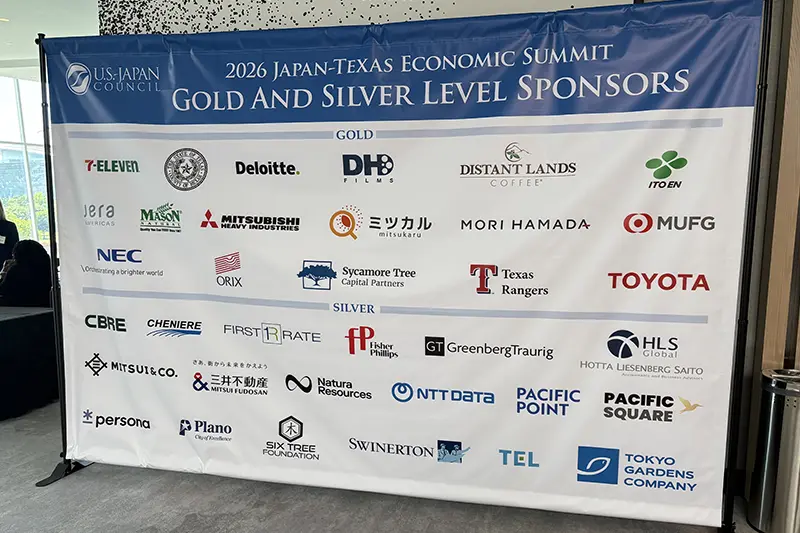
Japan-Texas Economic Summit 2026 is organized by U.S.-Japan Council (USJC), a nonprofit dedicated to strengthening relations between the United States and Japan. The 2026 edition was held over three days in Arlington, in the Dallas–Fort Worth area, and was built around the practical question of how Japan and Texas can grow together across trade, technology, energy, and capital.
The scale of that relationship is significant. According to the U.S.-Japan Council, more than 400 Japanese companies now operate in Texas, supported by roughly $31 billion in trade between the two economies and a decade of steady investment. Texas is projected to become the most populous U.S. state by 2045, with rapid expansion in energy, advanced manufacturing, semiconductors, biotechnology, and space. The Summit was designed to connect Japanese capital and technology with that growth.
- Dates: May 11–13, 2026
- Location: Arlington, Texas (Dallas–Fort Worth area)
- Host: U.S.-Japan Council (USJC)
- Scale: More than 400 Japanese companies in Texas and roughly $31 billion in U.S.–Japan trade
- Format: Three days of plenary sessions, themed breakouts, and networking receptions
- Core themes: Trade and investment, semiconductors, AI and data-center infrastructure, energy and LNG, space, construction and real estate, and capital markets
Inside the Three-Day Program
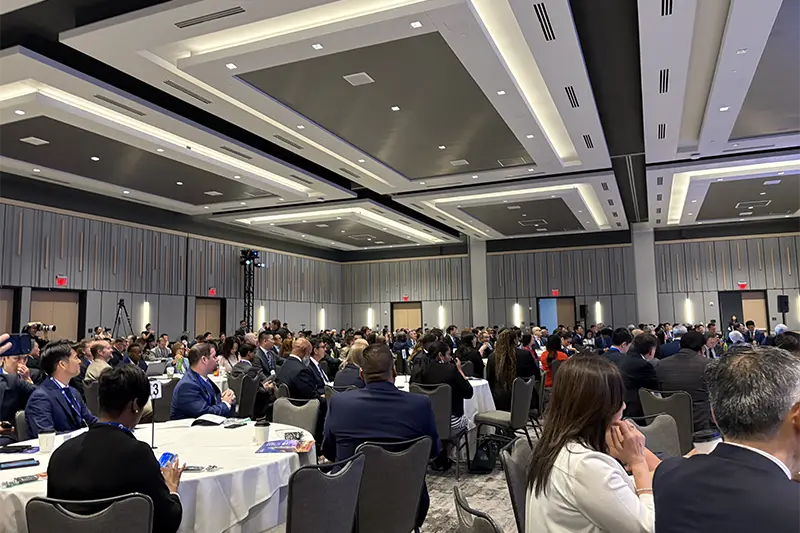
The Summit followed a clear three-day structure: an opening day focused on welcome and networking, a full second day of plenary sessions and themed breakouts, and a third day centered on energy. The summary below describes how the program unfolded.
Day One — Monday, May 11: Welcome and Networking
The Summit opened with conference registration and a Welcome to Texas reception, followed by a VIP and sponsors dinner held at Globe Life Field. The first day was designed to set the tone and give participants from both countries time to connect before the formal sessions began.
Day Two — Tuesday, May 12: Plenary Sessions and Breakouts
The second day was the core of the program. A morning plenary opened with welcome remarks from the U.S.-Japan Council and ABeam Consulting, followed by keynote addresses from the Ambassador of Japan to the United States, Shigeo Yamada, the Governor of Aichi Prefecture, Hideaki Omura, and the Speaker of the Texas House of Representatives, Dustin Burrows, along with special remarks from the Mayor of Arlington, Jim Ross and the County Judge of Bexar County, Peter Sakai,. A featured panel, A Legacy of Partnership, brought together senior executives from Toyota Motor North America, NEC, and 7-Eleven to discuss how Japanese companies are shaping the future of Texas.
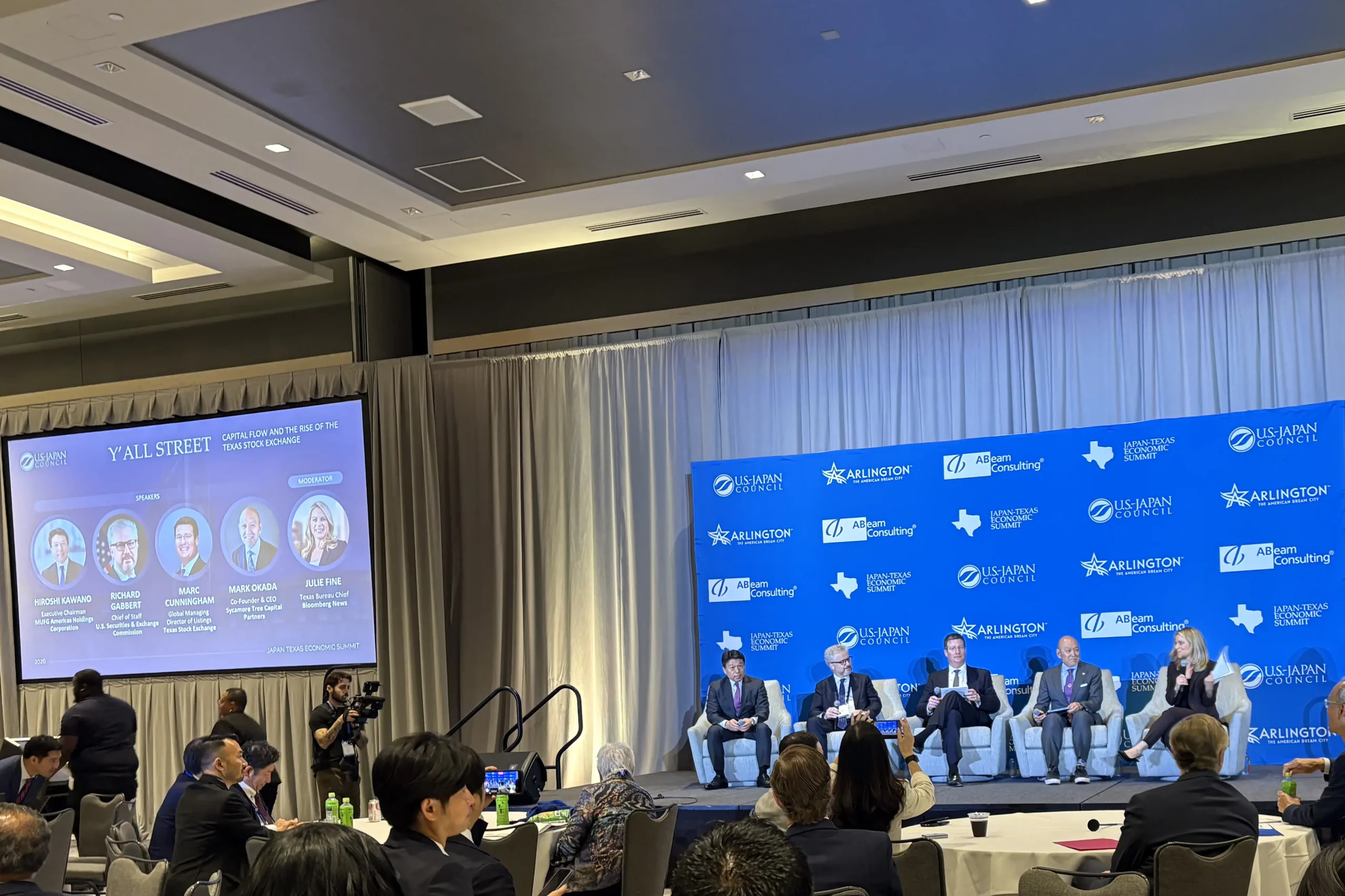
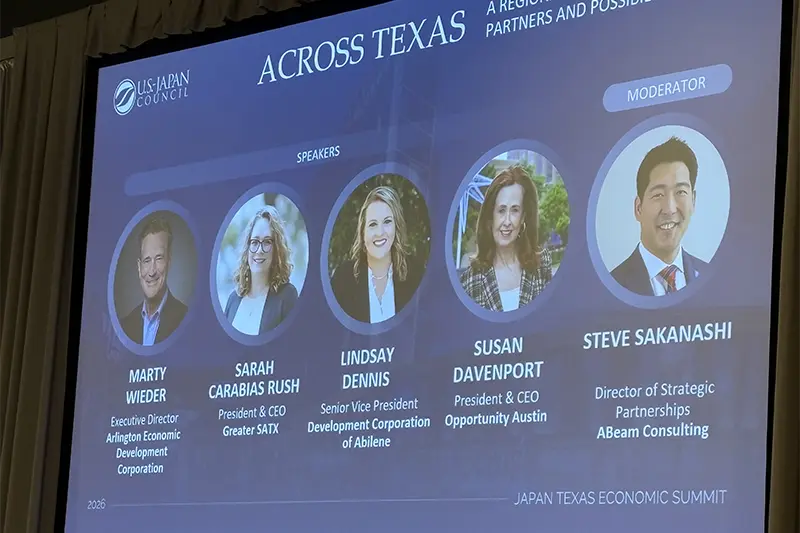
A luncheon plenary followed, including a regional showcase, Across Texas, with economic-development leaders from the Arlington Economic Development Corporation, Greater SATX, the Development Corporation of Abilene, and Opportunity Austin. The afternoon featured concurrent breakout sessions on semiconductors in Texas and Japan, workforce and immigration, sports and entertainment venues, space collaboration, food innovation, and Texas construction and real estate. A closing afternoon plenary addressed capital markets and the rise of the Texas Stock Exchange, and the day ended with a Taste of Japan reception.
Day Three — Wednesday, May 13: Energy in Focus
The final day concentrated on energy. Plenary sessions covered the future of data centers and the power they require, the role of Texas natural gas and LNG as a strategic pillar of the U.S.–Japan relationship, and the construction of a resilient energy mix for the decades ahead, with speakers that included Mitsubishi Heavy Industries America. The U.S.-Japan Council delivered closing remarks to conclude the Summit.
The Themes That Matter Most to Structural Steel
Several of the Summit’s themes connect directly to the work American Katerra does. The growth areas highlighted across the three days are also among the largest sources of structural steel demand in the United States.
Semiconductors and data centers
Semiconductor fabrication plants and data centers are among the most steel-intensive structures built today. Both featured prominently at the Summit, reflecting Texas’s push to expand chip manufacturing and AI infrastructure. As these facilities move forward, they create sustained demand for fabricated structural steel, framing, and supporting structures.
Energy and LNG infrastructure
The third day made clear how central energy is to the Japan-Texas relationship. Power generation, LNG facilities, and the broader energy build-out all rely on structural steel. For a fabricator, the emphasis on long-term energy investment points to a steady pipeline of industrial projects.
Construction and real estate
The construction and real estate session spoke most directly to our business. Continued development across Texas, from industrial facilities to commercial real estate, depends on a reliable supply of fabricated steel delivered on schedule. This is the demand American Katerra is positioned to serve.
What the Summit Means for American Katerra and Our Clients
For American Katerra, attending the Summit was a practical exercise rather than a ceremonial one. The program offered a direct view of where Japanese investment and Texas growth are converging, and that view feeds into how we plan capacity and serve general contractors, construction managers, and project owners across the state.
As the U.S. subsidiary of a Japanese heavy-industry parent, American Katerra sits at the intersection the Summit was built to advance. The themes on the main stage, from semiconductors and data centers to energy and construction, are the same forces that shape demand in our project pipeline. Tracking them early helps us anticipate where fabrication capacity will be needed before projects reach the bidding stage, and it strengthens our relationships with the economic-development organizations whose projects ultimately require structural steel.
Request Our Capability Statement
Planning a U.S. project that needs a structural steel partner with deep Japanese manufacturing roots and on-the-ground execution in Texas? Request our Capability Statement for an overview of our fabrication capabilities, project experience, and quality processes.