On April 7, 2026, a delegation from American Katerra traveled to College Station, TX to meet with faculty and researchers at Texas A&M University College of Architecture and the Texas A&M Engineering Experiment Station (TEES) Center for Infrastructure Renewal — marking an important milestone in the company’s strategy to embed itself within the academic ecosystem driving innovation in Green Carbon Steel™, BIM, and AI-augmented construction.
The visit was made possible through the generous coordination of Professor Koichiro Aitani of Kyushu University, whose long-standing relationships with both Texas A&M faculty and the Japanese architecture and engineering community served as the bridge that brought our two organizations together. We are deeply grateful for his hospitality and his commitment to fostering meaningful U.S.–Japan academic and industrial collaboration.
Why Texas A&M, and Why Now
American Katerra is positioned at the intersection of three converging fields: sustainable construction, digital design, and applied artificial intelligence (AI). As a U.S. subsidiary of Yamaguchi Heavy Industries, our mandate is to bring Japanese engineering rigor and decades of green carbon steel™ expertise to the rapidly evolving North American built environment market. Texas — and San Antonio in particular — sits at the heart of that opportunity, with a booming construction sector, strong policy tailwinds for clean industrial development, and a growing concentration of academic talent in adjacent disciplines.
Texas A&M University was a natural destination for several reasons. The College of Architecture has been an early and consistent voice in the integration of AI and BIM, and the BIM-SIM research team has been building a body of work that aligns directly with the technical roadmap American Katerra is pursuing. According to publicly available overviews of the university’s research programs, Texas A&M faculty are actively developing AI-driven tools that combine BIM with augmented reality and spatial reasoning to optimize building design and construction processes. They are also building a roadmap for AI in the construction industry — covering predictive maintenance, generative design, and improved project management — and they are training the next generation of practitioners through new initiatives such as the “Artificial Intelligence and Business” minor.
Each of those threads maps directly onto a near-term operational need at American Katerra. We are not visiting universities to admire their work from a distance; we are visiting them because we have specific projects, specific hiring needs, and specific research questions that benefit from a structured academic meeting.
A Productive Day in College Station
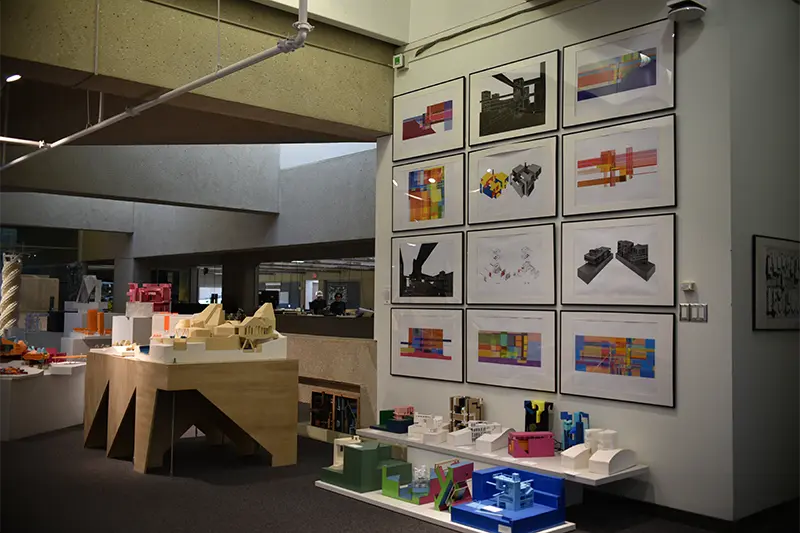
The day began at 12:30 PM at Langford Architecture Building (Langford A), where Professor Aitani and Dr. Benjamin Ennemoser — Assistant Professor at the College of Architecture — welcomed the team. From there, the visit unfolded across several distinct but connected conversations.
Meeting Dr. Wei Yan, Interim Department Head
Dr. Wei Yan, who serves as Interim Department Head, took time during a busy academic week to meet with the American Katerra team and discuss potential alignment between our technical priorities and the department’s research agenda. Dr. Yan also offered to facilitate a connection to leadership at the Texas A&M Engineering Experiment Station‘s Center for Infrastructure Renewal — a generous gesture given the short notice — and that introduction ultimately materialized later in the afternoon.
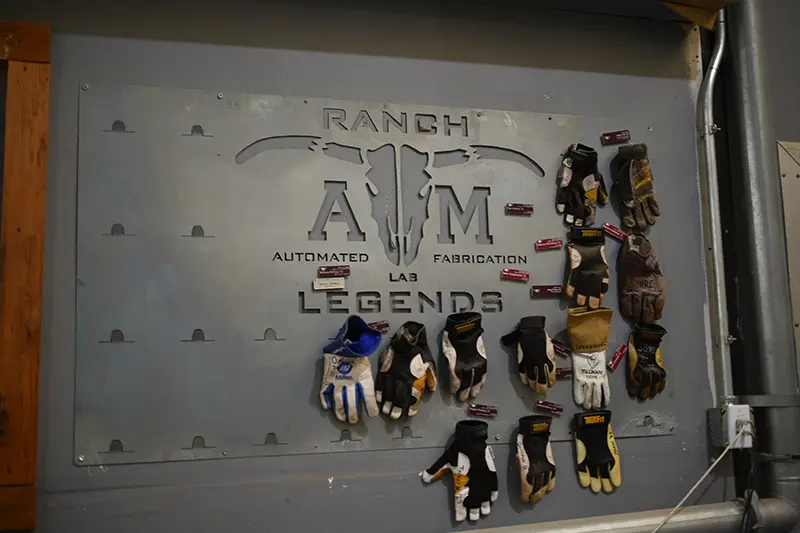
Touring the Langford Architecture Building and the Automated Fabrication & Design Lab
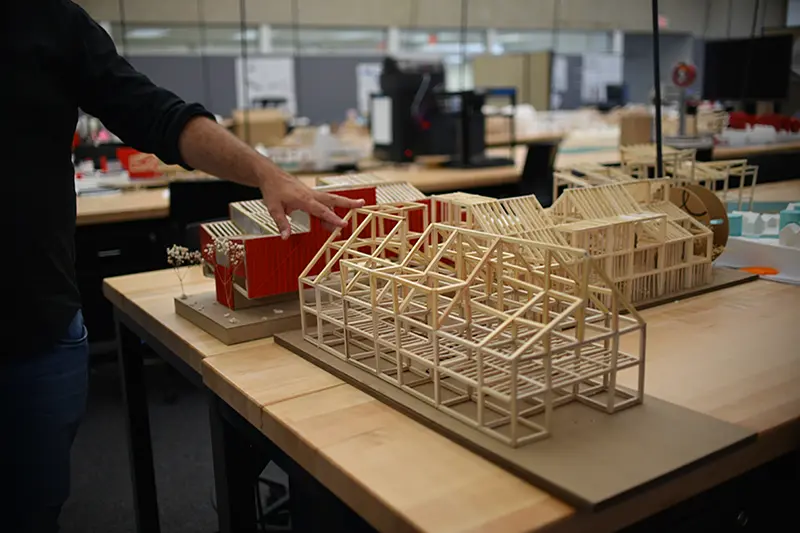
Walking the halls of Langford A and visiting the Automated Fabrication & Design Lab gave our team a firsthand look at the breadth of student work and the sophistication of the research environment. From parametric design studios to robotic fabrication setups, the lab represents the kind of hands-on, computationally-rich training environment that produces graduates who can step into a company like ours and contribute from day one.
What stood out most was the quality of student output. These are not students learning BIM as an abstract software exercise; they are using BIM as the connective tissue across design, simulation, fabrication, and construction logistics. That is precisely the mental model we need on our team as we scale our operations in San Antonio.
Meeting Dr. Anand Puppala at the Center for Infrastructure Renewal
Late in the afternoon, the team had the opportunity to briefly meet Dr. Anand Puppala, Professor and Director of the Center for Infrastructure Renewal (CIR). Although the meeting was short — a 15-minute introduction wedged into a tight schedule — it laid important groundwork. The CIR’s focus on infrastructure innovation, advanced materials, and large-scale testing capabilities represents an area we hope to keep exploring for American Katerra’s green steel manufacturing initiatives. We will be following up directly with Dr. Puppala in the coming weeks to explore concrete next steps.
What Comes Next: Continued Academic Dialogue

American Katerra places a high value on collaborative research and development with academic institutions. We believe the most productive industry-academic relationships are not transactional but structural — built on multi-year commitments, clearly defined research questions, and direct, ongoing engagement with students and faculty. Internally, we are now formalizing the structure of our academic meeting program, and Texas A&M is among the first institutions we hope to engage on that basis.
The framework we are developing will likely span four interlocking elements:
- Sponsored research projects — Funded engagements where Texas A&M faculty and graduate students work on problems drawn directly from American Katerra’s technical roadmap, such as AI-driven optimization of steel framing systems or BIM-to-fabrication automation pipelines.
- Internship and co-op programs — Structured pathways for undergraduate and graduate students to spend a semester or summer working alongside our engineering, BIM operations, and manufacturing teams in San Antonio. We are firm believers that the best way to assess fit — for both sides — is to work together on real problems.
- Capstone and studio sponsorship — Providing materials, technical mentors, and real-world design briefs to undergraduate studios and graduate capstone projects, with a focus on steel-based and sustainability-driven work.
- Recurring guest engagement — Periodic guest lectures, jury participation, and lab visits by American Katerra technical staff, ensuring that the relationship stays warm and that students get exposure to current industry practice.
We expect to share a more detailed framework with our Texas A&M counterparts in the coming weeks, and we welcome feedback from faculty on how to design the program in a way that delivers real value to students and to the university’s research mission.
A Note on Recruiting

While our trip to College Station was framed primarily around research project, it would be disingenuous not to acknowledge the recruiting dimension. American Katerra is hiring. We are building out our BIM operations team, our green steel engineering team, and our AI and digital infrastructure team in San Antonio, and we are looking for early-career engineers, designers, and analysts who can grow with the company.
A Cross-Border Story Worth Telling
There is a broader narrative running underneath this visit that we want to call out explicitly. American Katerra exists because Yamaguchi Heavy Industries — our parent company in Japan — believes that the United States, and Texas in particular, is the right place to build a new kind of construction business: one that combines Japanese standards of manufacturing precision, decades of expertise in steel, and a serious commitment to carbon management, with the scale, dynamism, and innovation capacity of the U.S. market.
That cross-border story is also why a visit like this one matters. Professor Aitani’s role in connecting Kyushu University, Texas A&M, and American Katerra is not incidental — it is emblematic of the kind of trilateral academic-industrial collaboration that we believe can unlock meaningful progress on shared challenges in sustainability, infrastructure, and the built environment. We are proud to be part of that story, and we are committed to building on it.
Photo Gallery
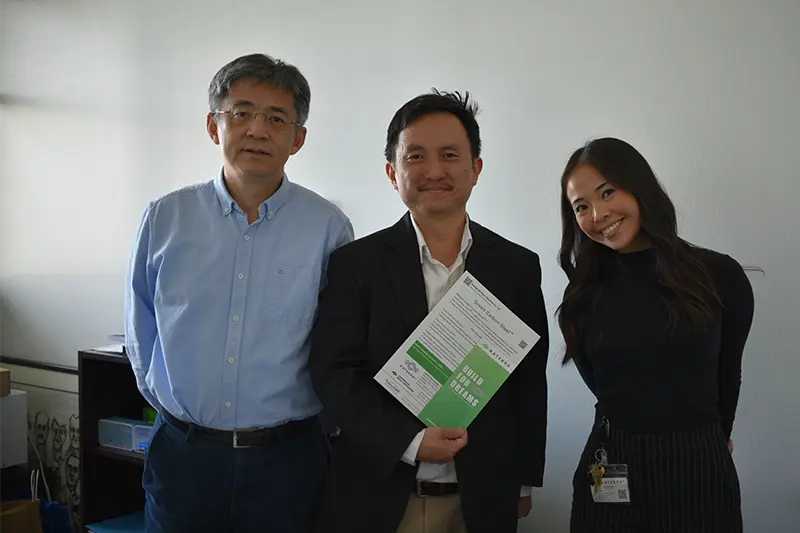
Picture with Dr. Wei Yan
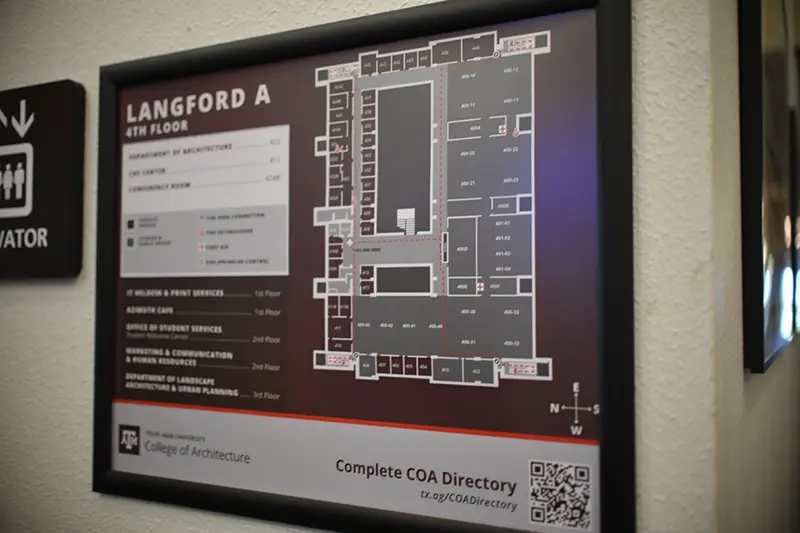
Map of Langford A building
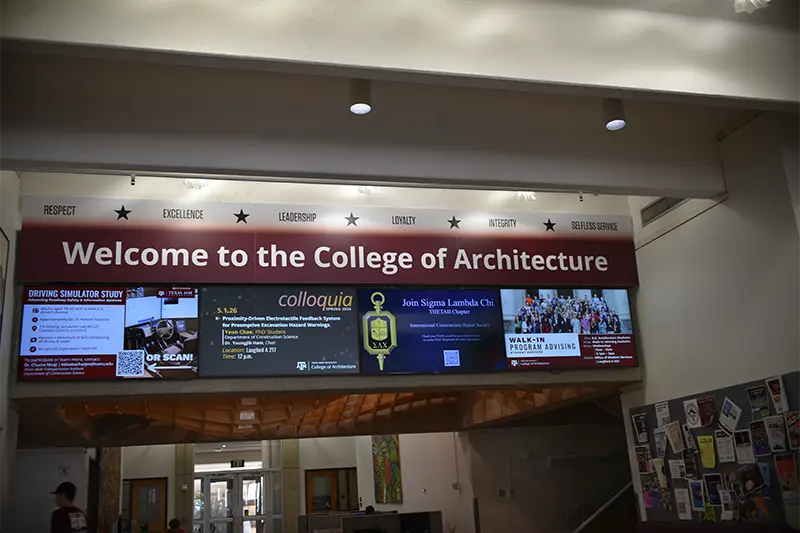
First floor of the College of Architecture
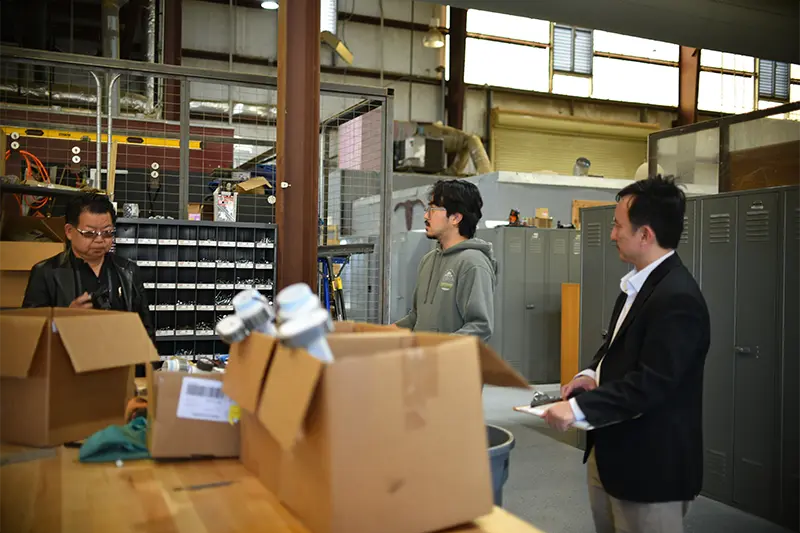
Tour of the Automated Fabrication & Design Lab
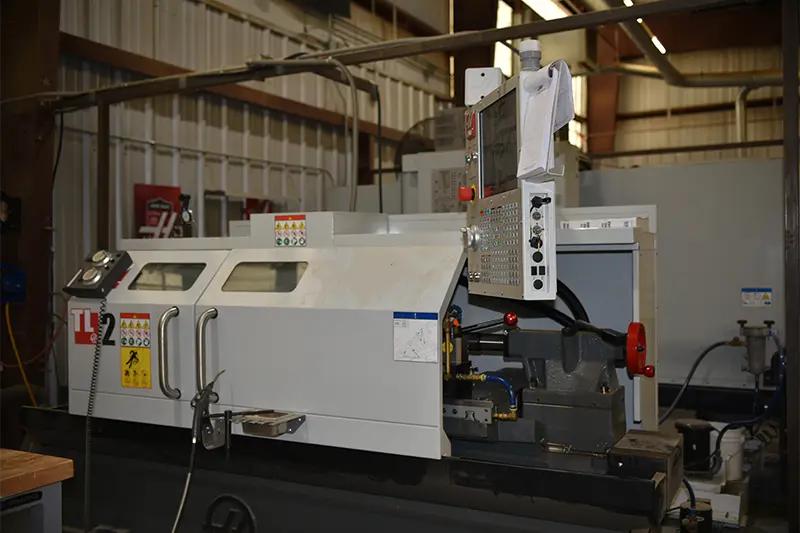
Haas TL-2 CNC Toolroom Lathe
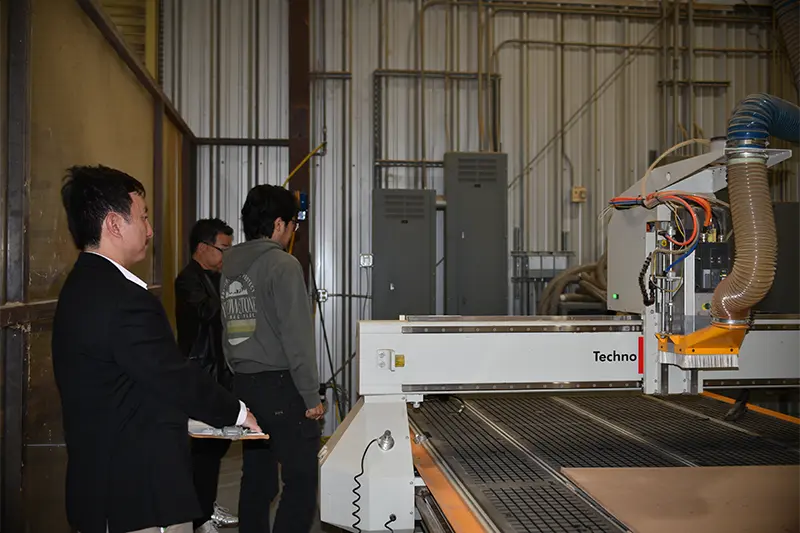
Techno CNC Router
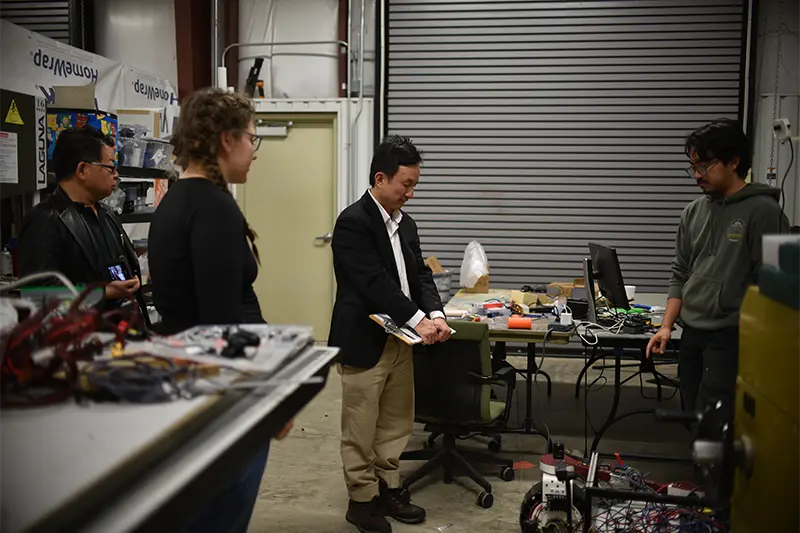
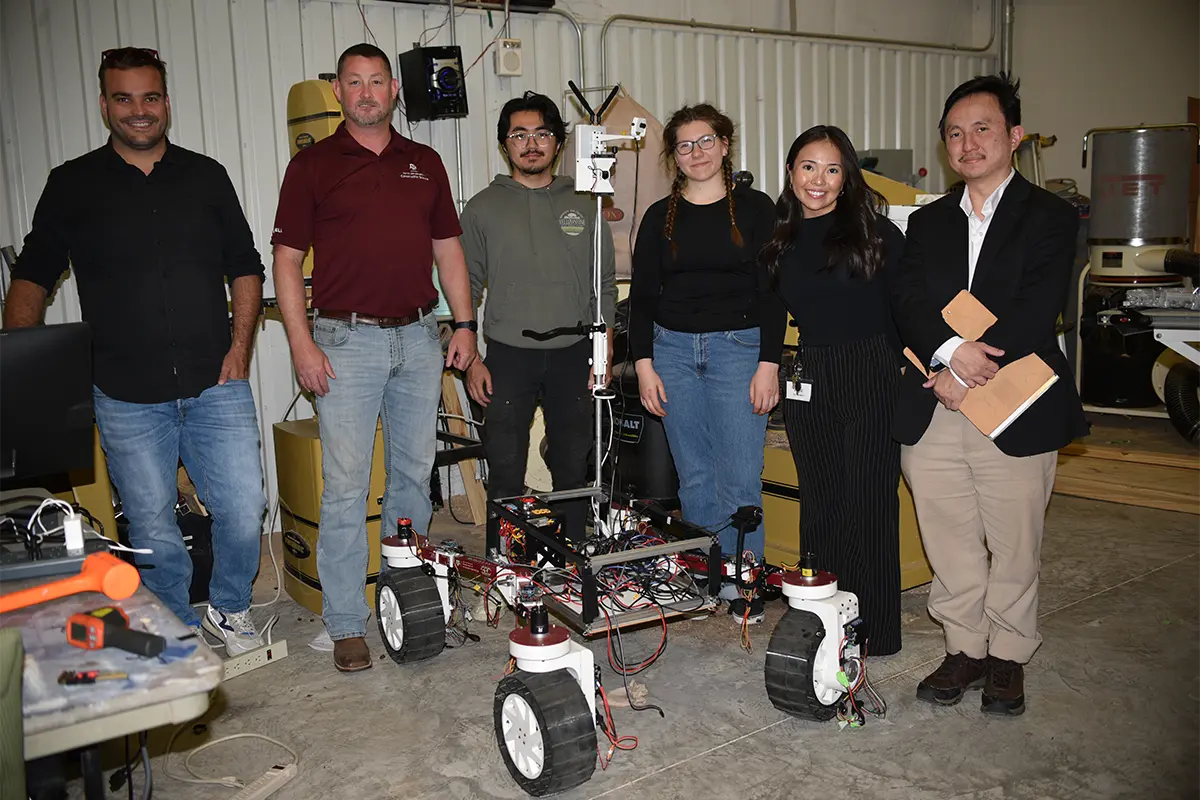
Students explaining their robot project